|
|
Population: 23,700.
Language: Hamer-Banna.
Neighboring Peoples: Banna.
History: They
belong to a group of culturally distinct people known as the Sidamo. Although
they are racially mixed with the Bushman hunters who originally inhabited the
region, they do not have any Bushman features. Authorities agree that they are
clearly a mixture of the Caucasian and the Negroid races.
Economy: Most of
the Hamer are cattle breeders.
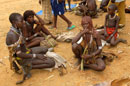
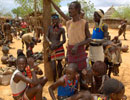
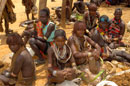
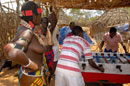
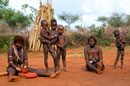
Social System: The Hamer live in camps that
consist of several related families. The families live in tents arranged in a
circle, and the cattleare brought into the center of the camp at night. When the
campsite is being set up, beds for the women and young children are built first;
then the tent frame is built around it. The tents are constructed with flexible
poles set in the ground in a circular pattern. The poles are bent upward,
joining at the top, then tied. The structures are covered with thatch during the
dry season and canvas mats during the rainy season. Men and boys usually sleep
on cots in the center of the camp, near the cattle. Herds belonging to the
Hamer-Banna consist mainly of cattle, although there are some sheep and goats.
Camels are used for riding and as pack animals.
Most Hamer-Banna plant
fields of sorghum at the beginning of the rainy season before leaving on their
annual nomadic journey. Some households also plant sesame and beans. Because the
crops are usually leftunattended, the yields are low. Few households grow enough
grain to last through the year.
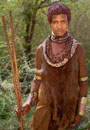
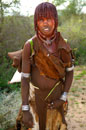
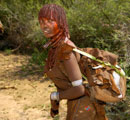
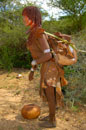
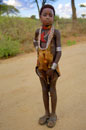
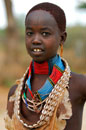
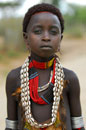
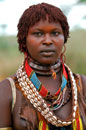
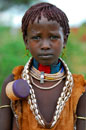
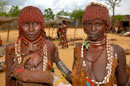
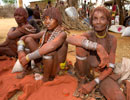
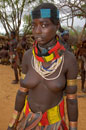
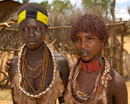
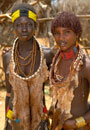
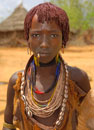
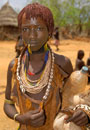
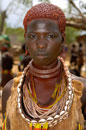
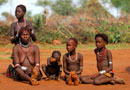
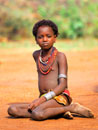
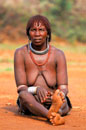
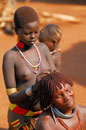
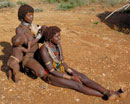
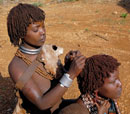
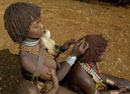
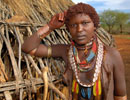
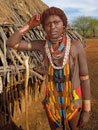
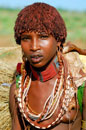
One striking characteristic of the
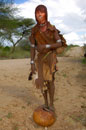
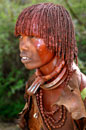
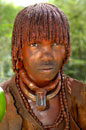
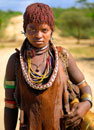
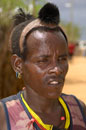
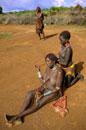
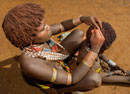
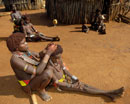
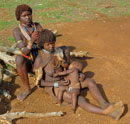
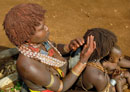
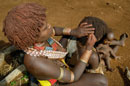
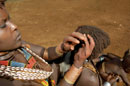
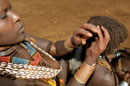
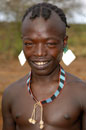
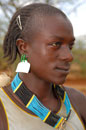
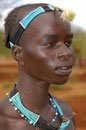
Hamer-Banna men and women is that they indulge in elaborate hair-dressing.
They
wear a clay "cap" that is painted and decorated with feathers and other
ornaments. Much time is spent inpreparing the hair, and care must be taken to
protect it from damage. This is one reason the men often sleep on small,
cushioned stools. The women use the butter for the perfect look manteinance of
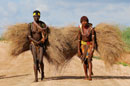
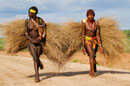
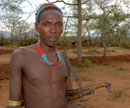
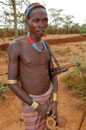
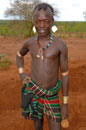
their hair-dressing. A well-dressed man will wear a toga-like cloth and carry a
spear and a stool. Women also commonly wear colorful toga-like garments. Men may
marry as many women as they like, but only within their own tribe. A "bride
price" of cattle and other goods is provided by the prospectivehusband and his
near relatives.
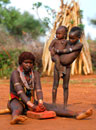
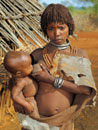
A typical household consists of a woman, her children, and a
male protector. A man may be the protector of more than one household, depending
on the number of wives he has.
Also, men are sometimes assigned the
responsibility of protecting a divorced woman, a widow, or the wife of an absent
husband (usually his brother). Marriage celebrations include feasting and
dancing. Young girls as well as boys are circumcised.
Religion: The
Hamer-Banna are 90% Sunni Muslim. They observe the five basic teachings of
Islam, which include acknowledging that Allah is the only god, praying, fasting,
giving alms to the poor, and making a pilgrimage to Mecca. However, many
elements of their traditional religion are still practiced. For instance, they
believe that natural objects (rocks, trees, etc.) have spirits. They also
believe in jinnis, or spiritsthat are capable of assuming human or animal form
and exercising
supernatural influence over people. |